
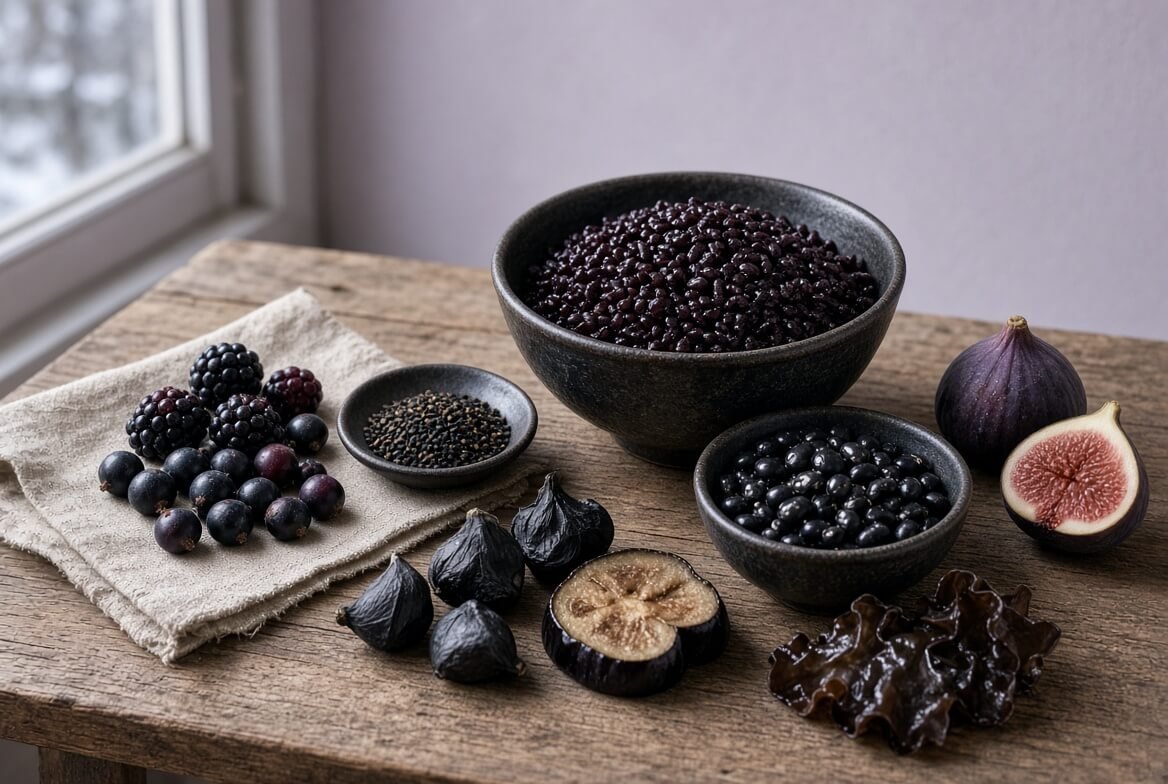
Energetic Winter — the season of the Water element — runs November 8 to January 17. Its color is black (and blue-black). Its weather is cold. Its work on the body is storage, rest, and deep hydration.
If you only remember three things from this page:
In TCM, black and blue-black foods are Winter’s foods — the same way red foods belong to Summer and white foods to Fall.
Eat them warm and cooked: soups, stews, congee. Balance the dark foods with yellow-orange roots and squashes.
Cold and indoor heat dehydrate skin as surely as they chill the body. The winter analog of your Fall cream is Water Day Cream.
Partake of the mystique of quantum energetic formulated plant-based skincare for your exalted natural beauty and well-being. Subscribe for a discount promo code, plus get truly unique beauty tips and offers.
Why black foods in Winter
The Huangdi Neijing (The Medical Classic of the Yellow Emperor) maps color to season. Green for Spring / Wood. Red for Summer / Fire. Yellow for Earth between seasons. White for Fall / Metal. Black for Winter / Water.
Water’s yin organ is the kidney; its yang organ is the bladder. Black foods are the traditional way to eat in step with that system — dark, mineral, inward, and warming when you cook them.
The pigment that makes these foods look black or blue-black is mostly anthocyanin. The darker the food, the more of it you generally have. Anthocyanins are flavonoids. They are the same family of plant pigments that make blueberries blue and blackberries black. The seed coat of black soybeans is often cited as one of the richest sources.
What that means on the plate is simpler than the chemistry: Winter meals that look dark — black rice, black beans, black sesame, wood ear, figs, forbidden rice — are doing seasonal work. Pair them with warming spices (ginger, garlic, cardamom) and yellow-orange vegetables so the diet is not only dark and not only cold.
Now is stew season. Many of the foods below drop straight into one pot: black garlic, black lentils or beans, eggplant, black rice.
15 black and blue-black foods for Water season
Black sea salt (kala namak) — High in sulfur; traditionally used for skin and digestion. A pinch in cooking is enough.
Black pepper — Stimulates digestive enzymes. Use at the end of cooking so the aroma stays.
Black currant — Tart, antioxidant-rich berries; also the base of crème de cassis.
Black tea — Warming, antioxidant-rich. Better than iced drinks in this season.
Black rice (forbidden rice) — Deep color, vitamin E, more fiber than white rice. Excellent in porridge or pilaf.
Black soybeans (kuromame) — Very high anthocyanin in the seed coat. Simmer until soft.
Black lentils — Iron-rich, hold their shape in soup.
Blackberries — Fiber plus the same blue-black pigment family.
Black beans — Everyday Water-season staple. Black turtle beans are especially warming.
Black sesame — Classic TCM kidney-and-bone food; also used for sleep support in the tradition. Toast lightly.
Black fungus (wood ear) — Iron and vitamin K. Soaks up broth. Common in winter soups.
Black garlic — Whole bulbs aged with heat until the cloves turn black and sweet; higher antioxidant levels than raw garlic.
Eggplant — Nearly black skin; cooks into stews without fuss.
Kelp — Iodine-rich sea vegetable; use in broth, not as a pile on the plate.
Black Mission figs — Fiber-rich, dark, good fresh or stewed.
For how to structure the whole winter plate — fats, roots, timing — see best Winter eating practices.
How to eat them so they actually warm you
Black foods in a smoothie in January work against the season. TCM Winter favors:
Cooked, warm meals
Soups and stews as the default
Roots and winter squash beside the dark foods
Ginger, garlic, rosemary, cardamom
Less raw, less iced, less grazing on dry crackers that pull fluid
Kidney-shaped foods (beans, seeds) are a traditional mnemonic. Nuts and slow carbohydrates give the body something to draw on through long, cold hours. Go no more than about four waking hours without eating if vitality drops in the afternoon.
What Winter does to skin

Water Day Cream — daytime or nighttime hydration against Winter cold and indoor dryness.
[Shop the cream →]
NEW CUSTOMERS: Enjoy 15% off this product. Get your promo code here.
Water’s climate is cold. Indoor heat is dry. Together they show on the face as dehydration, loss of tone, and lines that look deeper than they did in October. In PHYTO5’s system that is Water imbalance on the skin: lacking tone, thirsty, circulation a little stuck.
Food helps from the inside. The face still needs a winter cream.
The one product for this season
Crème Cérésal Eau — Water Day Cream is the Water line’s daytime moisturizer: your most fundamental Winter season cream. It is made to protect against Winter’s seasonal aggression — coldness — and to hydrate, firm, and tone skin that is mature, sun-worn, or simply dried out by furnaces and wind.
Use it if skin is relatively balanced and you want to live with the season, or if November has already left the face looking drawn.
How to use it from November 8 through January 17:
After cleanser and Water toner, warm a very small amount (about a dime) between your fingers. Pat gently onto face, neck, and décolleté in the morning. Less is more.
The cream is built around extracts of ginkgo and buckwheat, avocado and sunflower oils, and the Water essential-oil triad of juniper berry, rosemary, and sage. Buckwheat is a seed, not wheat; PHYTO5 uses it in the Water line for mineralizing, circulation, and elasticity — the same logic as eating dark, mineral foods in this season.
If you add only one Water product for the whole season, start here. The rest of the Water line is there when you want the full ritual.
